Youby minute 8
Before anything else, we listen
The history, what happened last time, and what you are actually worried about.
This is what the other thirty minutes buyAt Tooth Tales, a visit is never just drill and fill. It’s time spent explaining what we found, why it matters, and how to prevent it from happening again, because the goal isn’t one good appointment. It’s a child who never needs an urgent one.
That’s what “No Decay” actually means here: not a slogan, but a habit we build with you, one unhurried visit at a time.
Ten minutes is enough to find a cavity and fill it. It’s not enough for a child to feel at ease in the room. Scroll to see where the other thirty go.
The history, what happened last time, and what you are actually worried about.
This is what the other thirty minutes buyWe tell you what we found, what we would do about it, and what we would leave alone. It always is an informed decision as caregivers, at every stage of their lives.
We do not make the decision on our own. We also do not hand you a plan and leave you to work it out. You hear every option, with the reasoning, before anything starts.
Most children’s dentistry is spent repairing damage. We would rather spend it stopping damage, and that changes what a check-up is for.
Where a tooth does need work, we take the smallest amount of tooth we can and use bio-ceramic materials.
The goal is fewer root canals, not better root canals.
We have treated more than 1,000 children with special needs.
This is the one part of the clinic that is not limited to children. If you are an adult with special needs, or you care for one, we will see you.
Dr. Sanchit Paul wrote the special needs dentistry chapter in Muthu’s Pediatric Dentistry: Principles and Practice, 3rd edition.
Holds the Dr. J.C. Lee Award from SAAPD for work on laughing gas sedation.
Tooth Tales has treated children only for fifteen years. We do not take general adult patients. Everything in the clinic is built to one size: the room, the chair, the instruments, the appointment length and the words we use.
Your child is not handed to one person. Three things are true of every appointment, whoever is on that day.
Every case is handled by a team of six to eight people.
Our approach to pain and anxiety follows the training set out by SAAD, the Society for the Advancement of Anaesthesia in Dentistry.
Every instrument is sterilised in a hospital-grade autoclave between patients, with no exceptions. Filling materials come in sealed capsules.
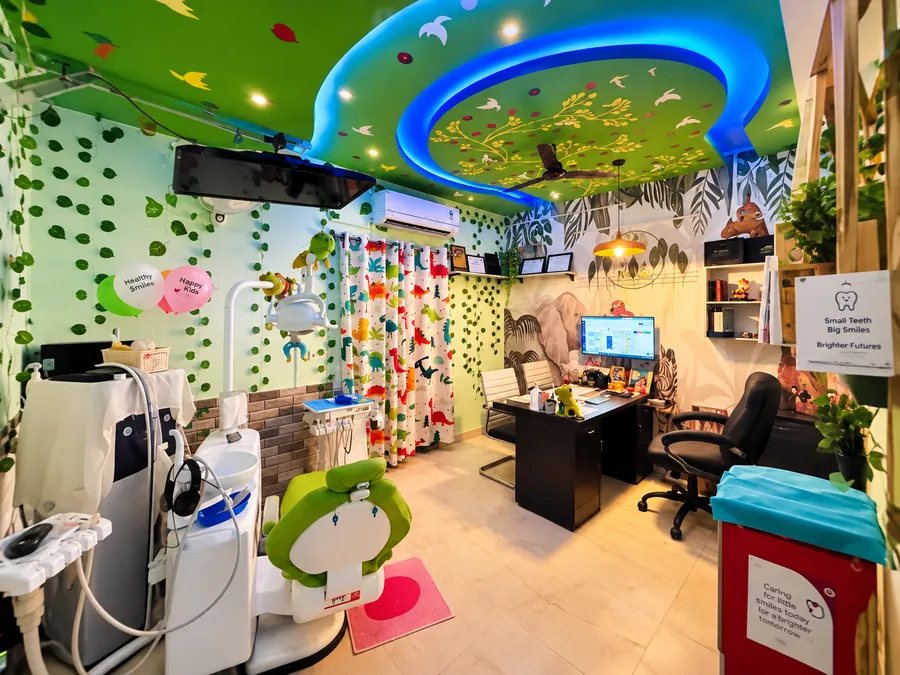
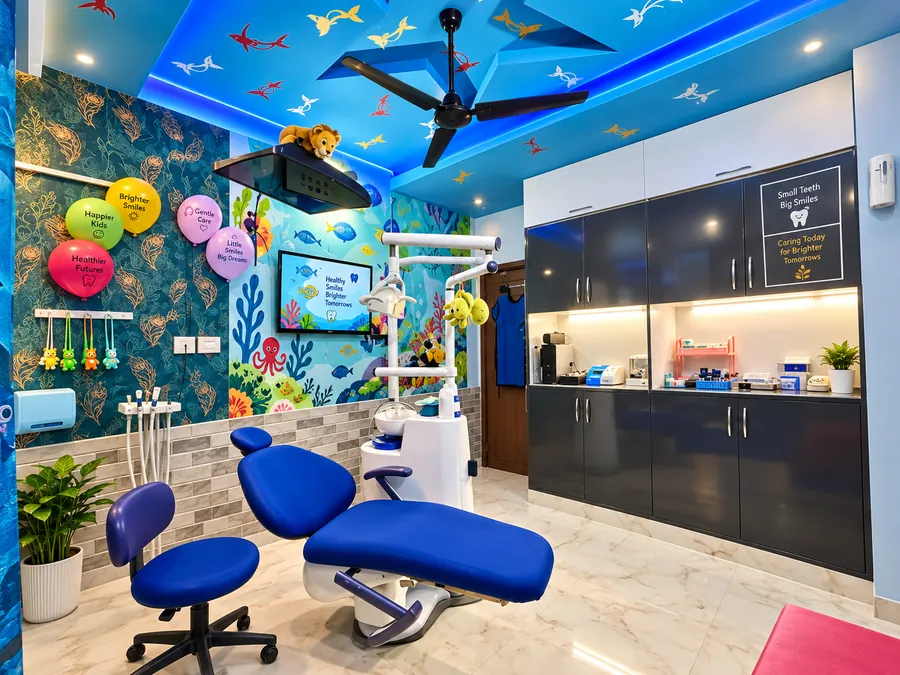
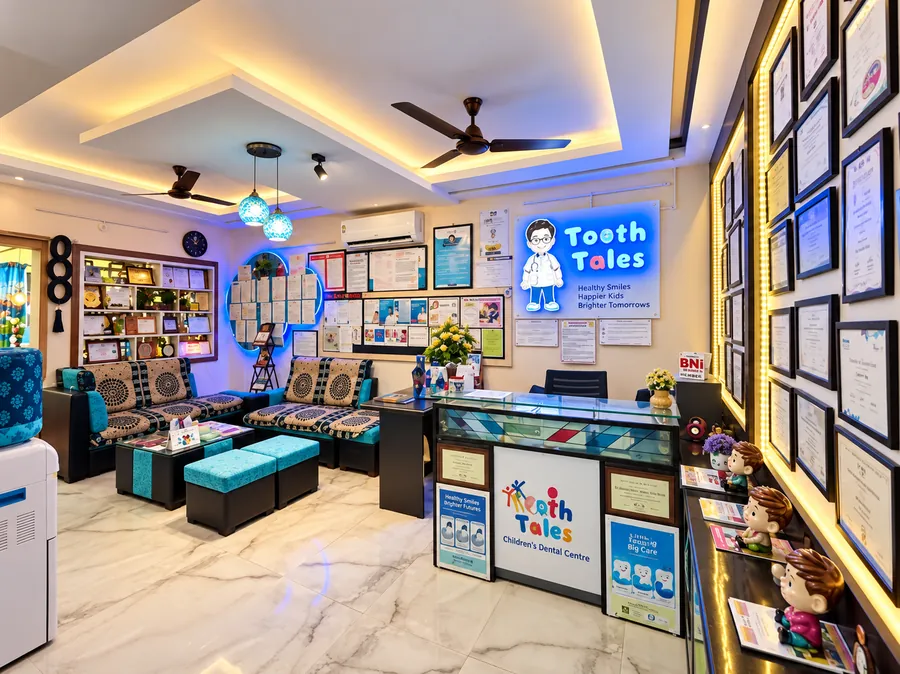
The clinic has two treatment rooms, and neither looks like a dental surgery. Before the appointment, you and your child settle in at the reception area.
One of two treatment rooms.
The second treatment room.
Where you and your child settle in before the appointment.
Google reviews from parents, and reels of families we have treated.
A mother on her daughter's care, a child with special needs
A fellow doctor on our special needs care
A 17-year-old with Down syndrome at his check-up
A 13-year-old with ASD and GDD who travelled from Nigeria
An 11-year-old girl with special needs at her review visit
Gentle check-ups for children with autism